GEC-ESTRO Belgrade
Dr Baron from Centre Antoine Lacassagne, Nice, giving 5 year results of OPERA Trial at this year’s GEC-ESTRO event in Belgrade.
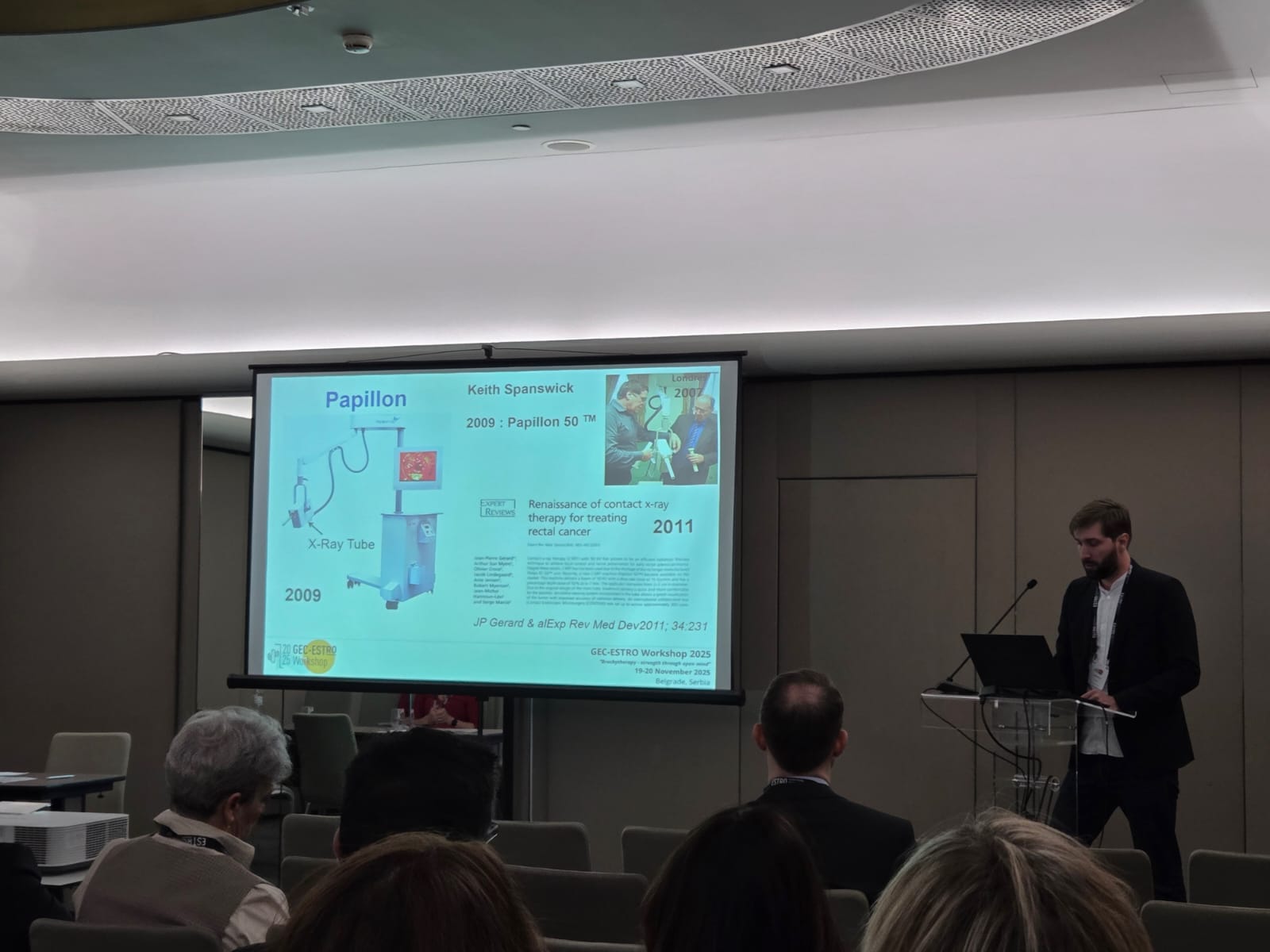

Dr Baron from Centre Antoine Lacassagne, Nice, giving 5 year results of OPERA Trial at this year’s GEC-ESTRO event in Belgrade.
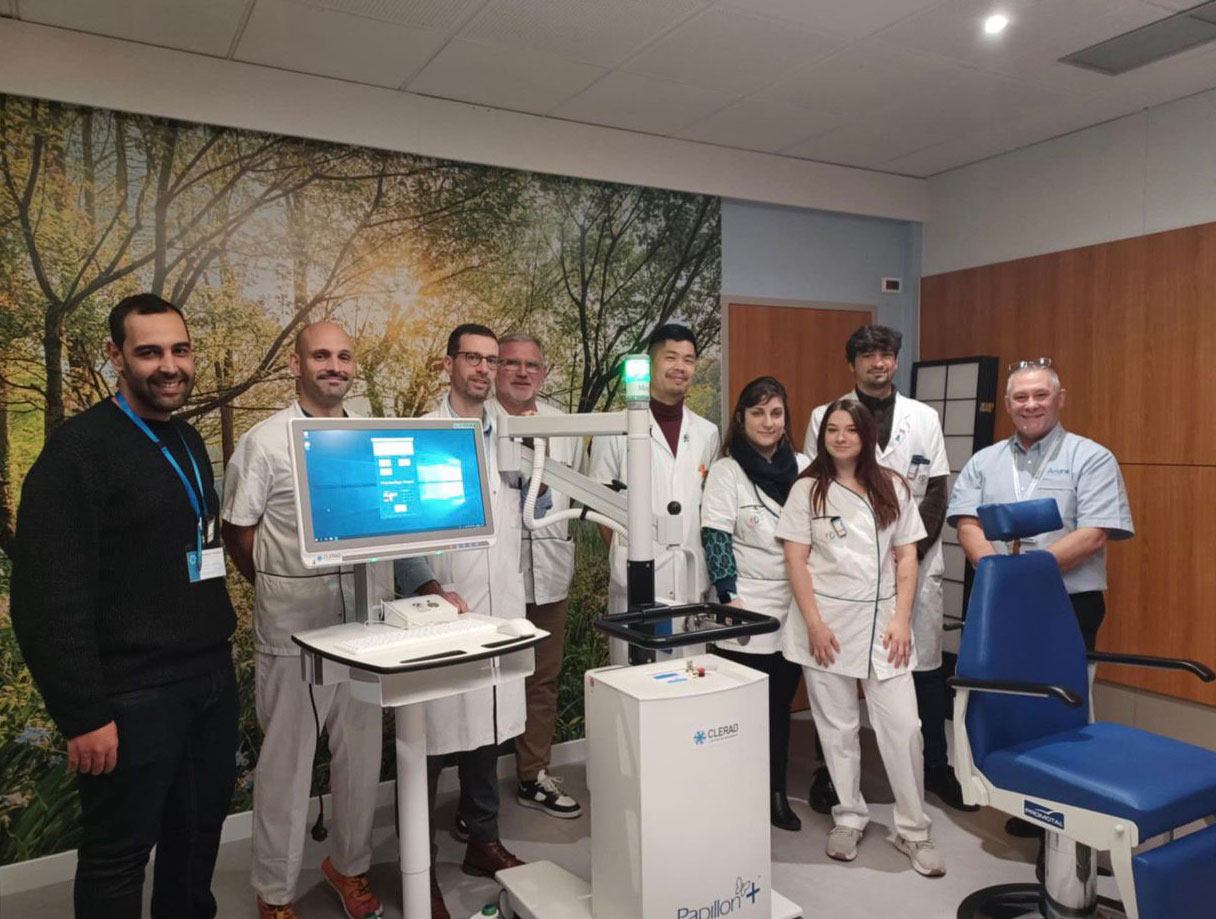
Peter Robinson (Ariane Service Manager) with the team at the Papillon+ installation at Chambray les Tours Hospital, France.
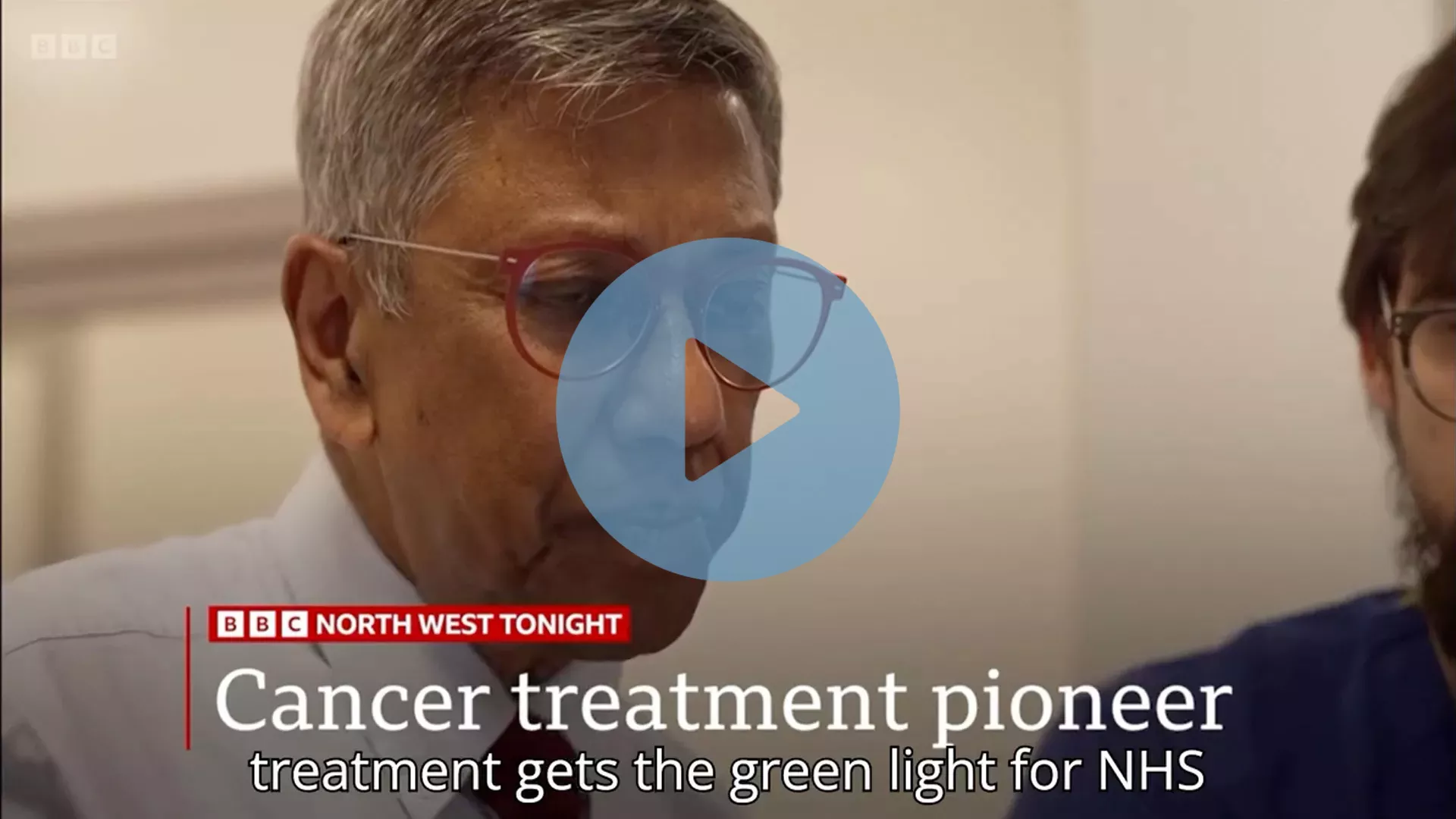
Landmark Approval: (NICE) the National Institute for Health and Care Excellence Recommends Low Energy Contact X-ray Brachytherapy (CXB) for Targeted Locally Advanced Rectal Cancer, Revolutionizing Patient Choice and Care
ALFRETON DERBYSHIRE 13TH November 2025 – Ariane Medical Systems Ltd The National Institute for Health and Care Excellence (NICE) has up dated its 2015 recommendations on the use of Low Energy X-rays in the treatment of lower rectal tumours to include operable patients who have up to a T3a-b tumour.
This positive recommendation for the use of low-energy Contact X-ray Brachytherapy (often referred to as the Papillon technique) will potentially allow thousands of patients a chance to avoid a permanent stoma usually associated with early-stage and locally advanced rectal cancer.
This pivotal decision validates the Papillon technique as a credible and highly effective healthcare process, offering a significant and transformative addition to the treatment landscape for both patients and clinicians across the UK. Prioritising Organ Preservation and Quality of Life The NICE committee thoroughly reviewed a bank of evidence, recognizing the treatment’s capacity to deliver exceptional patient outcomes. Key efficacy outcomes considered included: improved quality of life, organ preservation, avoiding a permanent stoma, clinical response, survival, and recurrence rates.
The Papillon technique allows patients to often avoid major, life-altering surgery (Total Mesorectal Excision, TME), thereby dramatically improving patient choice and overall quality of life by preserving the rectum and sphincter function. Robust Clinical Efficacy An international trial, including 4 centres in the UK (OPERA trial), has validated CXB treatment for tumours up to 3 cm in circumference and then to be combined with existing External Beam radiotherapy and chemotherapy for tumours of up to 5 cm. This combination allows larger tumours to be shrunk and the Contact X-ray Brachytherapy to be applied as a boost, dramatically increasing the likelihood of complete clinical response and organ preservation in over 80% of patients (up to 96% for those with smaller tumours who have CXB first). This approach, backed up by clinical data from the international trial called OPERA, represents a significant step forward in the non-surgical management of locally advanced rectal cancer.
Prof Arthur Sun Myint on the Papillon patient Facebook page wrote: “This guidance will be a game changer in the management of rectal cancer. As you know, surgery has always been a gold standard of care for rectal cancer. Contact X-ray Brachytherapy (CXB) is only reserved for patients not suitable for surgery (IPG532). From today CXB can be used as an option to treat all patients who are fit and suitable for surgery with operable rectal cancer not beyond cT3b cN1 (which is the majority of patients). This will change practice”.
Impact on Health Economics Beyond the clinical benefits, the recommendation is expected to have a considerable impact on health economics, by offering a highly effective, minimally invasive treatment pathway that can reduce the reliance on complex, expensive surgical interventions and long-term stoma care, Papillon CXB offers substantial savings to the NHS while enhancing patient recovery and return to normal life.
This approval confirms the use of Contact X-ray Brachytherapy (Papillon technique) as a standard-of-care option, providing multidisciplinary teams with a validated, highly effective, non-surgical tool to manage locally advanced rectal cancer.
There are currently 4 UK locations offering this treatment with two further sites being commissioned early in the New Year.
Papillon CXB Papillon is named after Prof Papillon who developed the treatment in Lyon in the 1960’s and was popular as a palliative treatment or an option for those unable to have major surgery. The technique all but disappeared in the 1990s when the manufacture of the old Philips RT50 stopped with just 2 doctors continuing the treatment on behalf of patients- Prof Jean-Pierre Gerard, Nice, and Prof Sun Myint, Clatterbridge cancer centre UK.
In 2005 Ariane Medical Systems was approached to make a new Low Energy system to enable this treatment to survive. Although not NICE approved, Ariane did so and the first new Contact X-ray Brachytherapy system was rolled out in 2009. Ariane now has clinicians in hospitals around Europe using their Papillon+™ Contact X-ray Brachy system to offer patients a non-surgical option in the treatment of colorectal cancer.
Media & Technical Contacts: Simon Bernard – CEO simon.bernard@arianemedicalsystems.com
Mark Davies- Cousins V.P. International Sales
mark.davies@arianemedicalsystems.com
Mobile: +44 (0) 7940359998
The final guidance for IP1724/2 – Low-energy contact X-ray brachytherapy for rectal cancer.
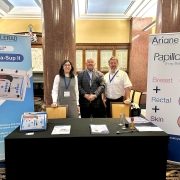
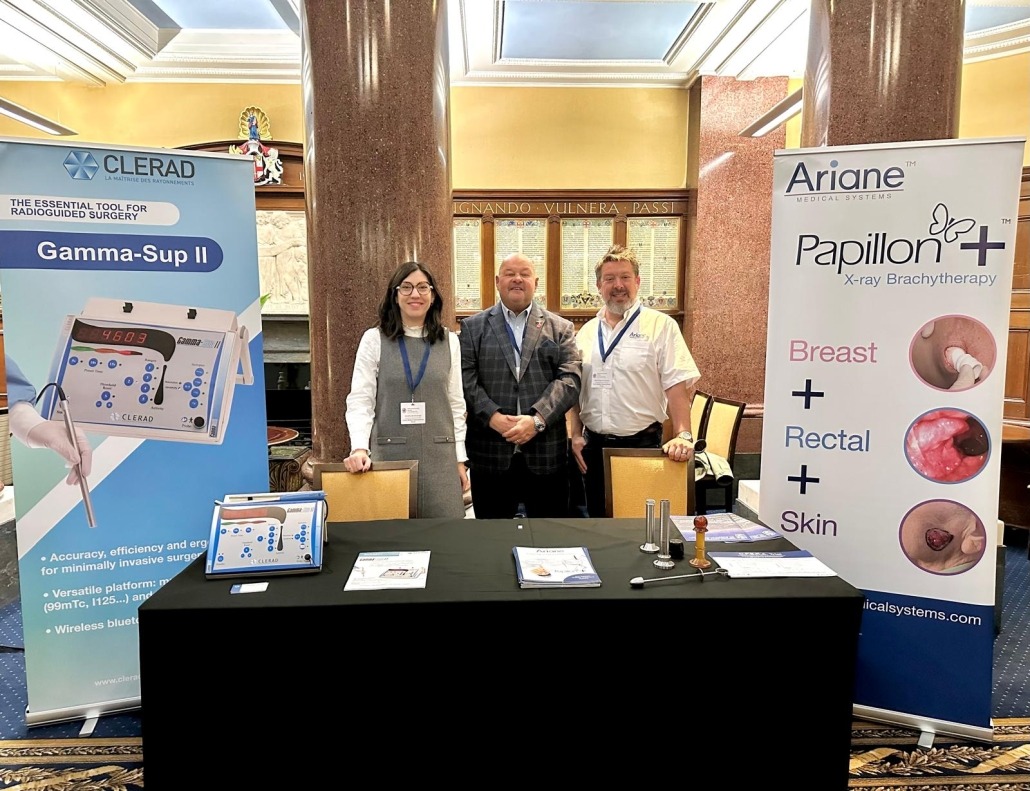
Hosted at the prestigious Grade II listed building venue in the heart of legal London, The Law Society is this year’s host building for the British Association of Surgical Oncology (BASO) event. Ariane seen here teaming up with our partners Clerad to promote their Sentinal Node detector Gamma Sup II.